
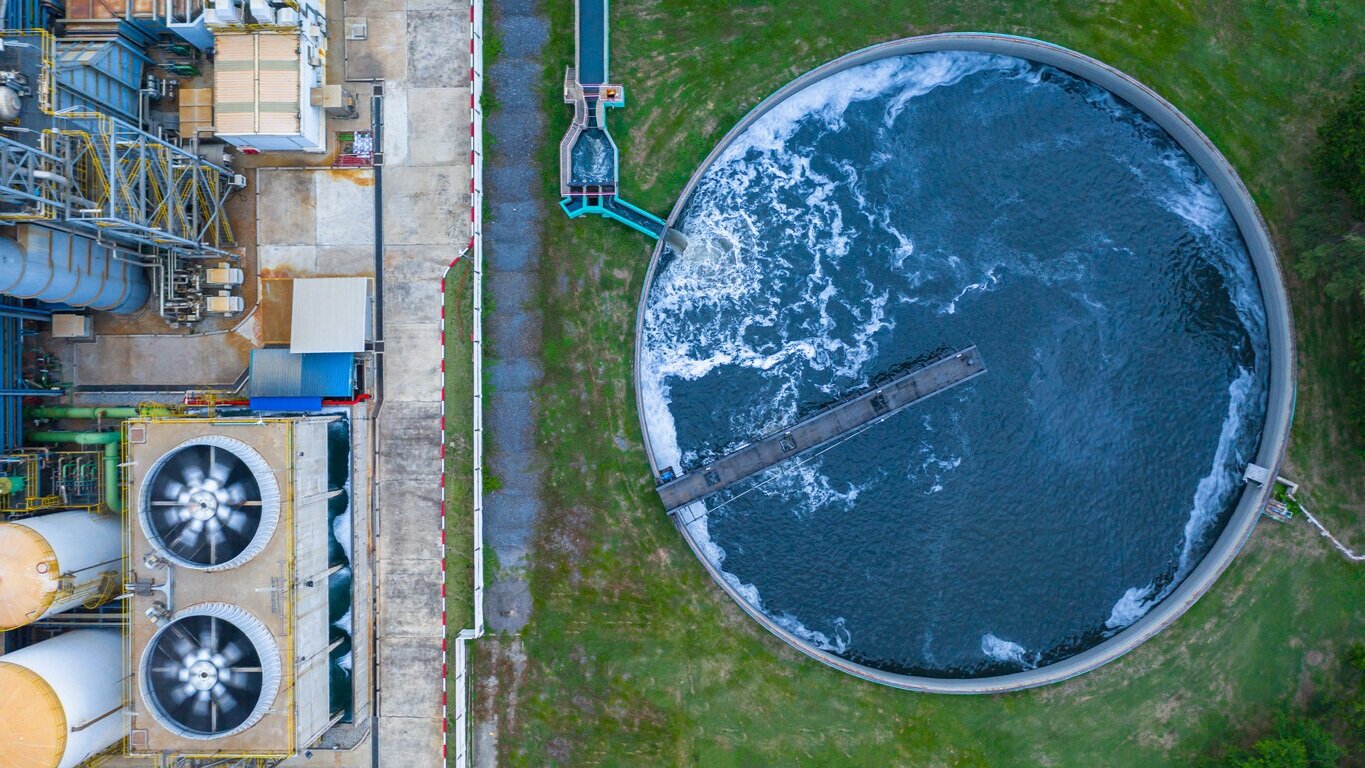
What Is an Equalization Tank? Its Critical Role and Design Guide in Wastewater Treatment Systems
Businesses that aim to achieve high efficiency and sustainability in wastewater treatment systems must structure their processes correctly. At this point, physical pre-treatment units form the foundation of the system. In particular, equalization tanks stabilize the entire treatment process by controlling fluctuations in flow rate and pollution load.
In this article, you will explore what an equalization tank is, why it plays a critical role, and how to design it effectively.
What Is an Equalization Tank?
An equalization tank is a pre-treatment unit that actively balances fluctuations in flow rate and pollutant load in incoming wastewater. Throughout the day, changes in production processes and usage patterns continuously alter wastewater characteristics. As a result, these variations create instability within treatment systems.
For this reason, an equalization tank:
- Regulates flow
- Balances pollutant concentration
- Ensures a homogeneous influent to the system
As a result, the treatment plant operates in a more controlled and predictable manner.
Why Use an Equalization Tank?
Wastewater treatment systems are highly sensitive to sudden changes. In industrial facilities, especially, production cycles often create significant fluctuations. If these variations enter the system directly, performance quickly declines.
Therefore, using an equalization tank becomes essential.
For example:
- Increased flow during peak hours strains system capacity
- Sudden pollution loads disrupt biological balance
- Irregular flow damages equipment
However, an equalization tank eliminates these issues. In addition, it improves overall system efficiency. Moreover, it helps reduce operational costs.
How Does an Equalization Tank Work?
An equalization tank operates on a simple yet effective principle. Let’s break down the process step by step:
First, wastewater enters the tank. Then, the system retains the water for a specific period. During this time, mixers activate and create a homogeneous mixture. In some cases, aeration systems also operate to prevent odor formation.
As a result, the system transfers balanced wastewater to the next treatment stage in a controlled manner. Consequently, the impact of sudden fluctuations disappears.
Types of Equalization Tanks
Engineers design equalization tanks in different types based on their intended use.
Flow Equalization Tanks
These systems regulate only the flow rate. Municipal treatment plants commonly prefer this type.
Load Equalization Tanks
These tanks directly control pollutant loads. Therefore, industrial facilities use them more frequently.
Combined Equalization Tanks
These systems balance both flow rate and pollutant load simultaneously. For this reason, they deliver the highest efficiency.
Equalization Tank Design Criteria
A successful system requires proper design. Otherwise, the system cannot achieve the expected performance.
During the design phase, engineers must consider the following factors:
- Daily flow variations
- Wastewater characteristics (COD, BOD, pH)
- Retention time
- Mixing requirements
- Aeration needs
- Area and volume planning
In addition, automation systems play a crucial role. Because effective control mechanisms ensure uninterrupted operation.
Advantages of Equalization Tanks
Facilities that use equalization tanks gain multiple advantages. First, the system becomes stable. At the same time, treatment efficiency significantly increases.
Furthermore:
- Energy consumption decreases
- Chemical usage becomes optimized
- Equipment lifespan extends
- Failure risks decrease
As a result, businesses achieve cost efficiency while meeting environmental regulations more easily.
What Happens Without an Equalization Tank?
Facilities without an equalization tank face serious risks. Initially, the system operates unstably. Then, sudden load variations reduce performance.
Moreover:
- Biological processes deteriorate
- Discharge limits may be exceeded
- Equipment failures increase
Therefore, modern wastewater treatment plants consider equalization tanks as a fundamental component.